
Power of the Mind: Mindfulness and Growth Guide

TL;DR:
The mind can be trained and reshaped through neuroplasticity and deliberate practice.
Mindset and mental habits significantly influence resilience, focus, and overall well-being.
Flexibility and self-compassion are key to sustainable mental strength and growth.
Most people assume the mind is something you either have control over or you don’t. That belief keeps millions stuck, convinced that mental strength is a fixed trait reserved for a lucky few. But research tells a very different story. Your mind is not a static tool. It is a living, adaptable system that responds to how you use it. Neuroplasticity shows us that the brain physically reshapes itself based on your thoughts, habits, and experiences. That means mental strength is something you can build, not something you are simply born with.
Table of Contents
Key Takeaways
Point | Details |
Mind is adaptable | Your mind can grow and change at any age with practice. |
Everyday mindset matters | Simple shifts in attitude and habits have a big effect on well-being. |
Science backs techniques | Research shows mindfulness, affirmations, and positivity improve mental health. |
Practical tools empower you | Step-by-step strategies allow anyone to harness mental power for growth. |
What is the power of the mind?
The phrase “power of the mind” gets used a lot, but what does it actually mean in psychological terms? At its core, it refers to your capacity to direct your thoughts, regulate your emotions, sustain focus, and recover from adversity. These are not mystical abilities. They are trainable mental skills backed by decades of research.
The foundation of this concept is neuroplasticity, which is your brain’s ability to form new neural connections and reorganize existing ones throughout your entire life. The scientific evidence of neuroplasticity confirms that the human mind adapts and grows in response to deliberate practice, not just in childhood but well into adulthood. This dismantles the old idea that intelligence or mental capacity is fixed.
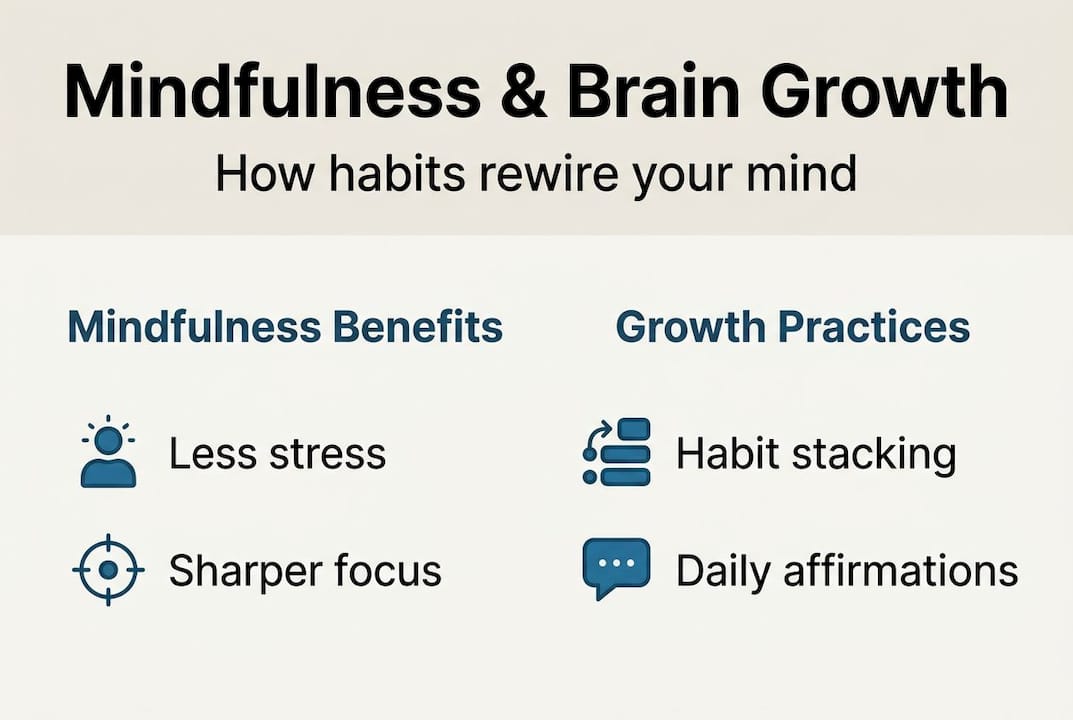
One of the most persistent misconceptions is that you are either a “focused person” or you are not. In reality, focus is a skill. So is resilience. So is emotional regulation. These capacities can be strengthened the same way a muscle responds to consistent training.
Here are the core mental capacities that define the mind’s power:
Focus: The ability to direct and sustain attention on what matters
Resilience: Bouncing back from setbacks without losing momentum
Emotional regulation: Managing your reactions rather than being controlled by them
Creativity: Generating flexible solutions and new perspectives
Self-awareness: Recognizing your own thought patterns and biases
“The mind is not a vessel to be filled, but a fire to be kindled.” This idea captures exactly what the science supports: your mind thrives when actively engaged, not passively left alone.
Understanding the mindfulness benefits connected to this adaptability is a powerful starting point for anyone wanting to grow mentally.
Everyday ways the mind shapes your reality
You might not notice it, but your mind is constantly influencing your daily experience. The way you interpret a stressful email, how you respond to a disagreement with a friend, whether you reach for a healthy snack or comfort food after a hard day. These are all shaped by your mental patterns.
A positive mindset significantly influences resilience and recovery rates, which means the story you tell yourself about challenges has measurable consequences. This is not about toxic positivity or pretending problems don’t exist. It is about choosing a perspective that keeps you moving forward.
Here is a simple comparison of how mindset affects real outcomes:
Area of life | Optimistic mindset | Pessimistic mindset |
Work performance | Higher productivity, creative problem-solving | Avoidance, procrastination |
Relationships | More empathy, better conflict resolution | Withdrawal, defensiveness |
Physical health | Faster recovery, stronger immune response | Slower healing, higher stress |
Daily habits | Consistent routines, proactive choices | Reactive patterns, inconsistency |
The ripple effect of mindset is hard to overstate. When you approach a challenge with curiosity rather than dread, your brain releases fewer stress hormones, making it easier to think clearly and act effectively. When you expect failure, your behavior often creates a self-fulfilling cycle.
Some practical examples:
At work, reframing a difficult project as a growth opportunity rather than a burden shifts your engagement level entirely
In relationships, assuming good intent before reacting reduces unnecessary conflict
For health, believing that small changes matter makes it easier to stick with them
Pro Tip: Try a two-minute mindfulness break between tasks. Close your eyes, take five slow breaths, and consciously reset your perspective before moving on. This simple pause can interrupt a stress spiral and restore mental clarity. Exploring balancing mental wellness can give you more structured ways to build this into your day.
Scientific foundations for unlocking your mental potential
The science behind mental training is more compelling than most people realize. It is not just motivational theory. There are measurable, physiological changes that happen when you practice mind-strengthening habits consistently.
Mindful practices can reduce stress hormones and enhance mental clarity, with studies showing significant drops in cortisol levels among regular meditators. Cortisol is the body’s primary stress hormone, and chronically high levels are linked to anxiety, poor memory, and weakened immunity.

Here is how mindful practice compares to passive coping:
Approach | Effect on stress | Effect on focus | Long-term outcome |
Mindful practice | Lowers cortisol measurably | Improves sustained attention | Builds resilience over time |
Passive coping | Temporarily numbs stress | Reduces clarity | Often worsens symptoms |
Two psychological frameworks are especially useful here. The first is growth mindset, a concept developed by psychologist Carol Dweck, which holds that abilities can be developed through effort and learning. The second is self-efficacy, introduced by Albert Bandura, which refers to your belief in your own capacity to succeed at specific tasks. Both have been shown to predict outcomes in education, health, and career performance.
The numbers are worth noting. Regular mindfulness practice has been associated with a 30 percent reduction in perceived stress and measurable improvements in working memory and attention span. These are not small gains. They represent a genuine shift in how your brain operates day to day.
For those curious about self-care for mental health, the research consistently points to consistency over intensity. Short, regular practices outperform occasional long sessions. And the stress management research backs this up with clear evidence.
Practical strategies to harness your mind’s power
Knowing the science is one thing. Putting it into practice is where real change happens. The good news is that you do not need hours of free time or expensive tools to start strengthening your mind today.
Positive affirmations and memory training both strengthen neurocognitive skills, meaning they physically support brain health alongside emotional resilience. Here is a step-by-step approach to get started:
Start with two minutes of focused breathing each morning. This primes your nervous system for calm and focus before the day’s demands kick in.
Write one affirmation that challenges a limiting belief. Keep it specific and present-tense, such as “I handle challenges with clarity and patience.”
Practice a memory exercise three times per week. Try memorizing a short list, recalling details from a conversation, or learning a new word each day.
Take a ten-minute walk in nature. Exposure to natural environments has been shown to reduce mental fatigue and restore attentional capacity.
Reflect for five minutes before bed. Note one thing you handled well and one thing you want to approach differently tomorrow.
These strategies work best when layered into habits you already have. That brings us to habit stacking.
Pro Tip: Attach a new mind-training habit to something you already do automatically. For example, practice your affirmation while brewing your morning coffee, or do your breathing exercise right after brushing your teeth. This dramatically increases follow-through because you are not creating a new routine from scratch.
Start small. Even one of these strategies practiced consistently for two weeks will produce noticeable changes in your focus and emotional steadiness. The goal is not perfection. It is progress, one small step at a time.
Why mental strength is about flexibility, not toughness
Here is something most mental wellness content gets wrong. We celebrate grit. We admire the person who pushes through pain, never asks for help, and refuses to slow down. But that model of mental strength often leads straight to burnout, not breakthrough.
The research, and honestly, real-world experience, tells a different story. The people who sustain high performance and genuine well-being over time are not the ones who are the toughest. They are the ones who are the most flexible. They adjust when a strategy stops working. They ask for support without shame. They stay curious instead of rigid.
We have seen this play out repeatedly. Someone commits to a strict meditation schedule and when life disrupts it, they feel like a failure and abandon the whole practice. That is toughness working against them. A more flexible approach would be: “I missed today, so I will do two minutes tonight instead of thirty.”
True mental power lives in your ability to adapt, not your ability to endure. Exploring how nature’s impact on the mind supports recovery and flexibility is one example of how softening your approach can actually strengthen your results. Self-compassion is not a weakness. It is the foundation that makes every other mental practice sustainable.
Ready to build your mental well-being?
You have just covered the science, the strategies, and the mindset shifts that make real mental growth possible. The next step is putting these ideas into a living practice that fits your life.

At Life So Well, we have built a library of resources designed to support exactly that kind of growth. Whether you are working through emotional patterns or building new habits from the ground up, our explore emotions resources page offers guided tools to help you understand and navigate your inner world with greater clarity and confidence. Your mind is ready to grow. We are here to help you guide it.
Frequently asked questions
How can I strengthen my mind daily?
You can practice mindfulness, affirmations, and simple memory exercises to build mental strength each day. Daily cognitive exercises benefit both focus and emotional resilience with consistent use.
Does mindset really affect physical health?
Yes, a positive or flexible mindset can speed up healing and support overall well-being according to psychological studies. Positive attitudes have been linked to improved recovery and stronger immune function.
What is neuroplasticity and why is it important?
Neuroplasticity is your brain’s ability to change and grow with practice, making it possible for anyone to enhance their mental capacities. The brain adapts and strengthens through active, intentional use over time.
Is meditation necessary to access the power of the mind?
Meditation is helpful, but you can also use affirmations, mindful breaks, and positive self-talk to benefit from your mind’s power. Various mental practices beyond meditation have been shown to improve resilience and mental clarity.
Recommended


Comments